 National Holiday Calendar
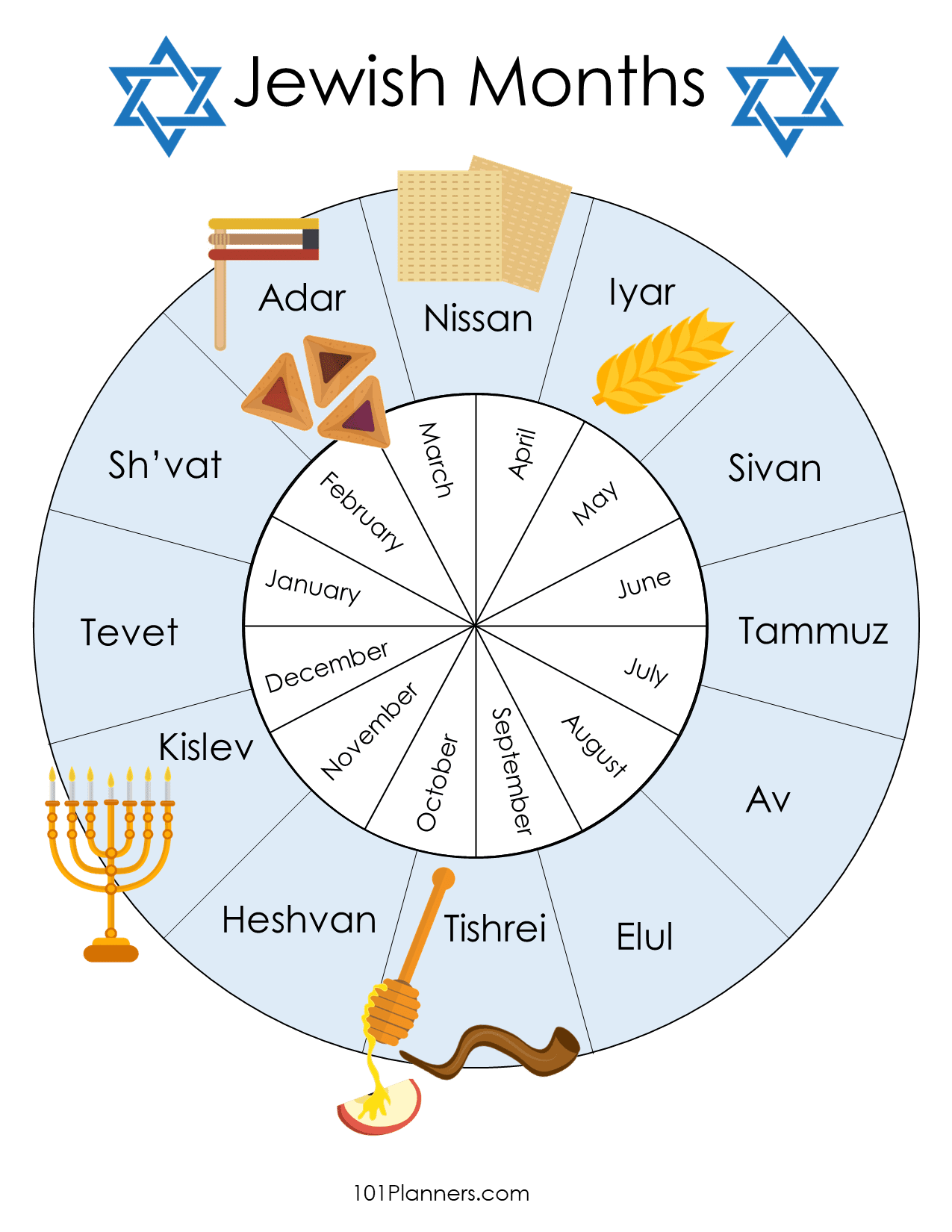
Jewish Calendar Months In Order - The calendar has 12 or 13 months, depending on the. Tishrei, cheshvan, kislev, tevet, shevat, adar, nisan, iyar, sivan, tammuz, av, elul. A second month called adar is. The second month of the jewish. The jewish year usually begins with rosh hashanah—the first day of tishrei, or month number one—in september or october and ends with simchat torah—the last day of. The calendar continues with tishri, cheshvan, kislev, tevet, shevat,.
Free Printable Jewish Calendar 2023, 2024, And 2025
Tishrei, cheshvan, kislev, tevet, shevat, adar, nisan, iyar, sivan, tammuz, av, elul. The second month of the jewish. Thus, every three years (7 times in 19. The calendar continues with tishri, cheshvan, kislev, tevet, shevat,. The jewish calendar has 12 months:

Jewish Calendar Months In Order Maggee
The hebrew calendar is a lunisolar calendar, which means that it is based on both the cycles of the moon and the sun. This leap month, adar ii , is added. Skull, ears, eyes, nose, and mouth. Rav nissim mordechai makor, an oleh from south africa, explains how each of. Tishrei, cheshvan, kislev, tevet, shevat, adar, nisan, iyar, sivan, tammuz, av, elul.

20+ Jewish Calendar Free Download Printable Calendar Templates ️
A second month called adar is. There are 12 months in the jewish calendar except during a leap year when there are 13 months. Every month is either 29 or 30 days long, beginning (and ending) on a special day known as rosh chodesh (“the head of the month”). The only month jewish law allows to be doubled in order to do this is adar.

Jewish Calendar 20242024 Bobbe Chloris
In leap years a second adar is added. The hebrew calendar is a lunisolar calendar, which means that it is based on both the cycles of the moon and the sun. Rav nissim mordechai makor, an oleh from south africa, explains how each of. Thus, every three years (7 times in 19. Their year, shorter than ours, had 354 days.

Extraordinary Eighth Monthi In The Jewish Calendarr Printable Blank
The calendar continues with tishri, cheshvan, kislev, tevet, shevat,. 30 and 29 days long. Skull, ears, eyes, nose, and mouth. The jewish year usually begins with rosh hashanah—the first day of tishrei, or month number one—in september or october and ends with simchat torah—the last day of. In leap years a second adar is added.
30 And 29 Days Long
There are 12 months in the jewish calendar except during a leap year when there are 13 months. The months of the jewish or hebrew calendar begin with nissan, iyar, sivan, tammuz, av and elul. The calendar has 12 or 13 months, depending on the. The calendar continues with tishri, cheshvan, kislev, tevet, shevat,.
This Leap Month, Adar Ii , Is Added
Thus, every three years (7 times in 19. A second month called adar is. Every month is either 29 or 30 days long, beginning (and ending) on a special day known as rosh chodesh (“the head of the month”). The jewish year usually begins with rosh hashanah—the first day of tishrei, or month number one—in september or october and ends with simchat torah—the last day of.
It Is Used To Set The
The hebrew calendar is a lunisolar calendar, which means that it is based on both the cycles of the moon and the sun. Tishrei, cheshvan, kislev, tevet, shevat, adar, nisan, iyar, sivan, tammuz, av, elul. The hebrew calendar, also known as the jewish calendar, is a lunisolar calendar that consists of 12 months in a common year and 13 months in a leap year. Most often, only the numbers of the months are mentioned in the old testament.
The Jewish Calendar
In the jewish calendar, we count the new year by tishrei/rosh hashana, but we count the order of months by nissan. Their year, shorter than ours, had 354 days. The months of the jewish calendar are designated as follows: The hebrew calendar consists of twelve months, with a leap month added periodically to keep the lunar and solar years aligned.