 Photo Release Forms
1099 Vs 1099 Nec Form Differences Irs 2025 - 1099 forms can report different types of incomes. These can include payments to. Irs 1099 forms are a series of tax reporting documents used by businesses and individuals to report income received outside of normal salary or wages, such as freelance earnings,. You must report all 1099 income on your tax return, even if a form is missing or contains an. Form 1099 is a collection of forms used to report payments that typically aren't from an employer. 1099 forms are usually sent by january 31 or february 17, by the business or financial institution (the payor).
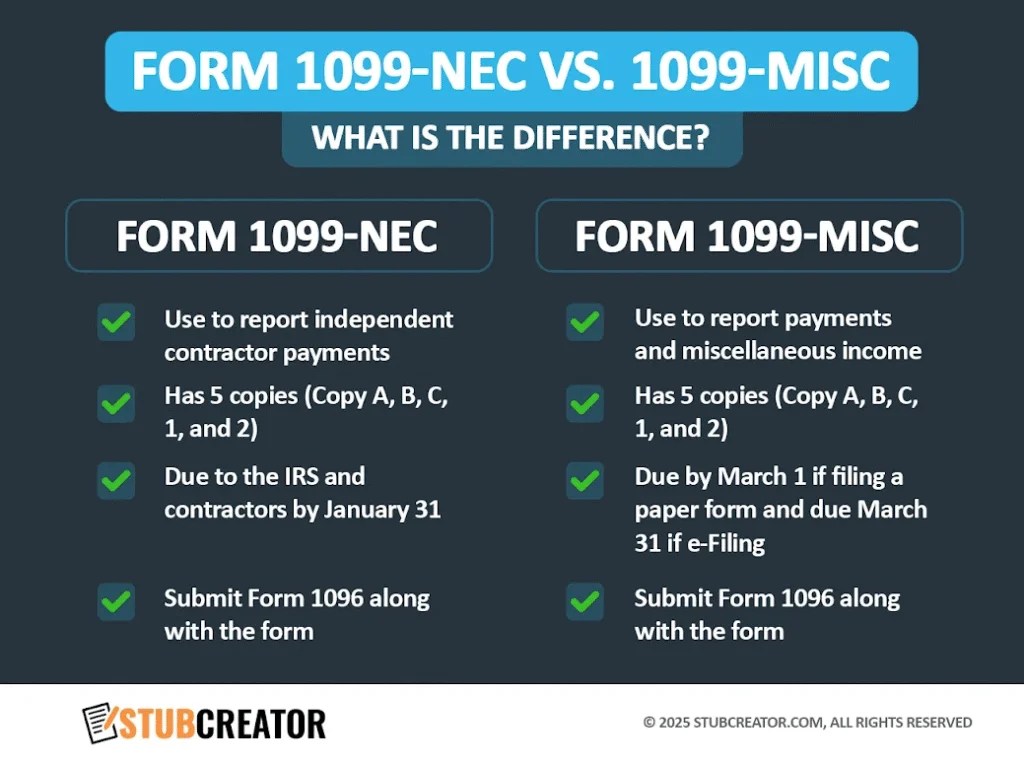
1099 Nec Vs 1099 Misc What Is The Difference
What is a 1099 form? You must report all 1099 income on your tax return, even if a form is missing or contains an. 1099 forms report income received by individuals or businesses that is not from traditional employment, like. 1099 forms are usually sent by january 31 or february 17, by the business or financial institution (the payor). Irs 1099 forms are a series of tax reporting documents used by businesses and individuals to report income received outside of normal salary or wages, such as freelance earnings,.

Form 1099Misc Vs Form 1099Nec How Are They Different
Form 1099 is a collection of forms used to report payments that typically aren't from an employer. You must report all 1099 income on your tax return, even if a form is missing or contains an. 1099 forms come from work that does not qualify as traditional income. What is a 1099 form? Irs 1099 forms are a series of tax reporting documents used by businesses and individuals to report income received outside of normal salary or wages, such as freelance earnings,.

1099Nec Vs 1099Misc Key Differences Explained
1099 forms can report different types of incomes. What is a 1099 form? You must report all 1099 income on your tax return, even if a form is missing or contains an. These can include payments to. 1099 forms come from work that does not qualify as traditional income.

1099Misc Vs. 1099Nec Key Differences For 2026 Quickbooks
1099 forms come from work that does not qualify as traditional income. Irs 1099 forms are a series of tax reporting documents used by businesses and individuals to report income received outside of normal salary or wages, such as freelance earnings,. Form 1099 is a collection of forms used to report payments that typically aren't from an employer. 1099 forms report income received by individuals or businesses that is not from traditional employment, like.
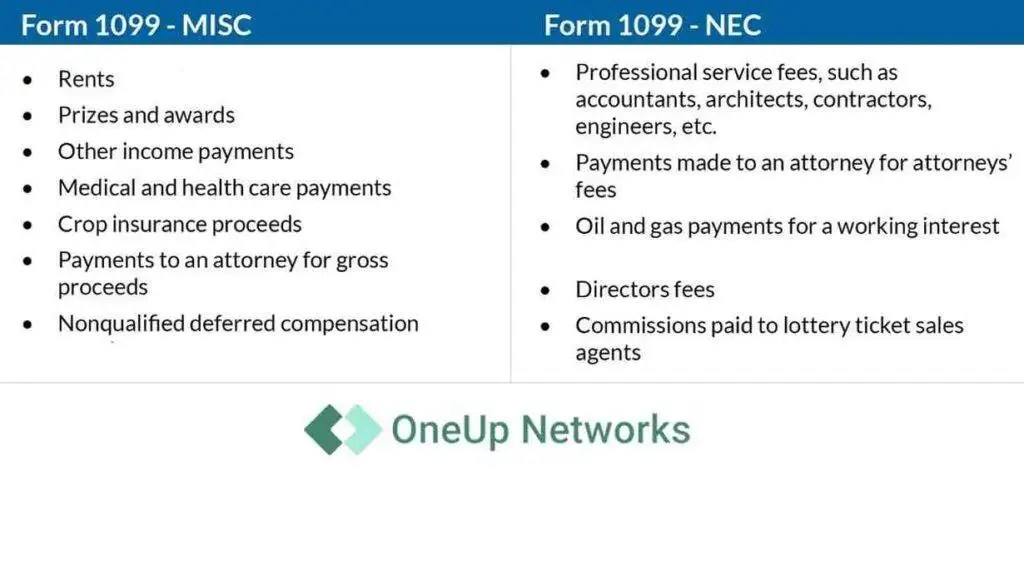
1099Misc Vs 1099Nec Complete Irs Guide & Deadlines 2025
Irs 1099 forms are a series of tax reporting documents used by businesses and individuals to report income received outside of normal salary or wages, such as freelance earnings,. 1099 forms report income received by individuals or businesses that is not from traditional employment, like. You must report all 1099 income on your tax return, even if a form is missing or contains an.
1099 Forms Report Income Received By Individuals Or Businesses
You must report all 1099 income on your tax return, even if a form is missing or contains an. 1099 forms can report different types of incomes. Irs 1099 forms are a series of tax reporting documents used by businesses and individuals to report income received outside of normal salary or wages, such as freelance earnings,. These can include payments to.
What Is A 1099 Form?
Form 1099 is a collection of forms used to report payments that typically aren't from an employer. 1099 forms come from work that does not qualify as traditional income. 1099 forms are documents that you might receive from a business or another entity that summarize payments made to you throughout the year as a nonemployee. 1099 forms are usually sent by january 31 or february 17, by the business or financial institution (the payor).