 Photo Release Forms
Which Side Lengths Form A Right Triangle - A2+ b2 = c2, where c is the longest side (hypotenuse). There are certain types of right triangles whose ratios of side lengths are useful to know. The sides of a right triangle are called legs (the sides of the right angle) and the side opposite the right angle is the hypotenuse. These are also found in specific values of trigonometric functions. It gives the calculation steps. Which set of side lengths forms a right triangle?

Special Right Triangle 3060, 4545, 3753. Elearning
These are also found in specific values of trigonometric functions. Right triangle calculator to compute side length, angle, height, area, and perimeter of a right triangle given any 2 values. There are certain types of right triangles whose ratios of side lengths are useful to know. We'll check each set of side lengths to see if. Use the pythagorean theorem to determine if the given side lengths could form a right triangle.
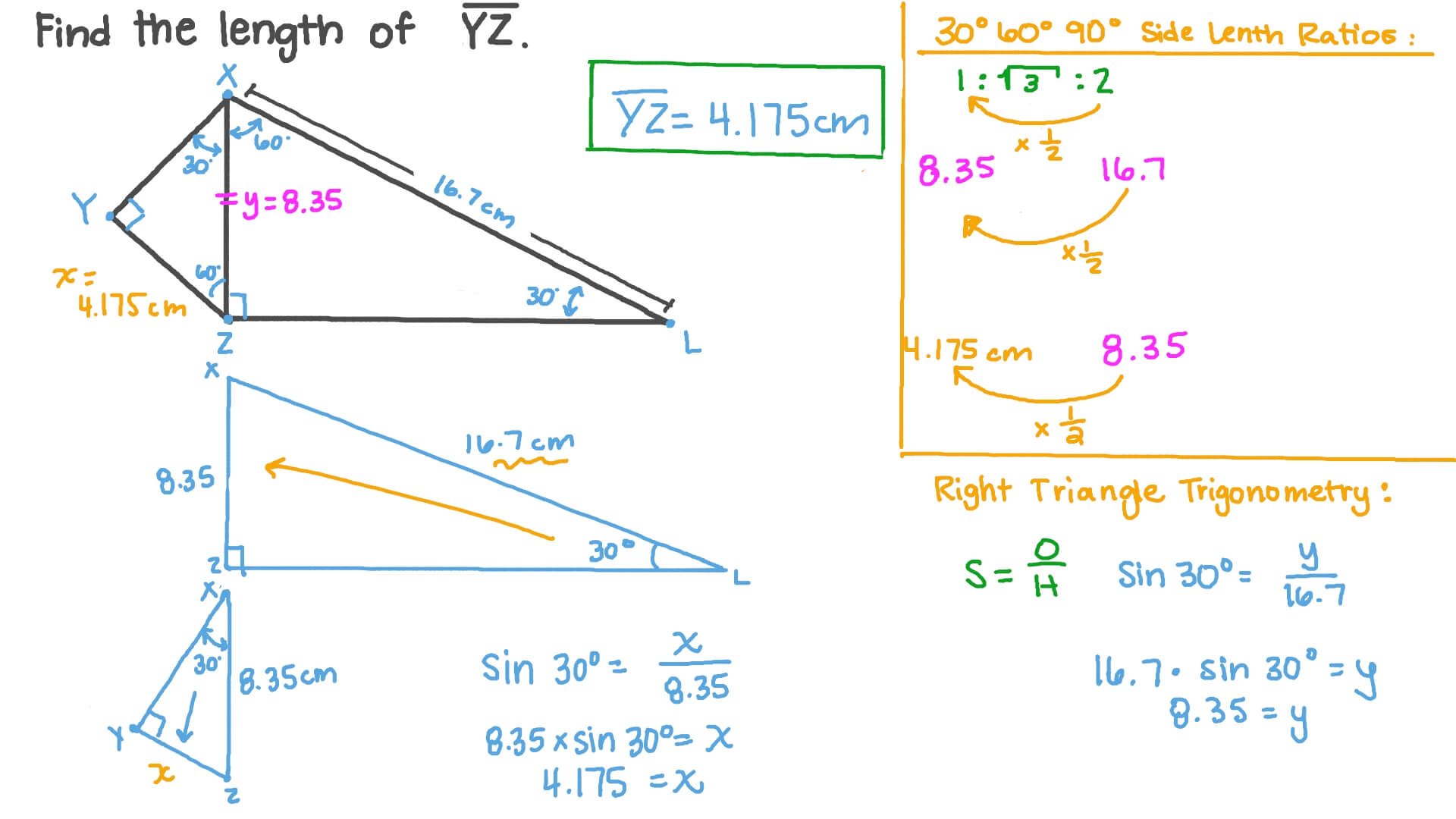
Formula For Right Triangle Lengths
We'll check each set of side lengths to see if. Use our right triangle calculator to find each side, angle, area, perimeter, height, inradius, and circumradius of a right triangle. A triangle is a right triangle if the lengths of its sides satisfy the pythagorean theorem: This triangle solver will also teach you how to find the area of a right triangle as well as give plenty of.

7.3 Day 2 The Pythagorean Theorem Ppt Download
A triangle is a right triangle if the lengths of its sides satisfy the pythagorean theorem: Use the pythagorean theorem to determine if the given side lengths could form a right triangle. A2+ b2 = c2, where c is the longest side (hypotenuse). Choose two given values, type them into the calculator, and the calculator will. It gives the calculation steps.

Right Triangle Calculator Pi Day
A2+ b2 = c2, where c is the longest side (hypotenuse). It gives the calculation steps. This triangle solver will also teach you how to find the area of a right triangle as well as give plenty of. Right triangle calculator to compute side length, angle, height, area, and perimeter of a right triangle given any 2 values. We'll check each set of side lengths to see if.

Ppt Exploring The Pythagorean Theorem And Triangle Properties
Right triangle calculator to compute side length, angle, height, area, and perimeter of a right triangle given any 2 values. Choose two given values, type them into the calculator, and the calculator will. This triangle solver will also teach you how to find the area of a right triangle as well as give plenty of. A2+ b2 = c2, where c is the longest side (hypotenuse).
These Are Also Found In Specific Values Of Trigonometric
Which side lengths form a right triangle? In an isosceles right triangle, the angles are. Use our right triangle calculator to find each side, angle, area, perimeter, height, inradius, and circumradius of a right triangle. The sides of a right triangle are called legs (the sides of the right angle) and the side opposite the right angle is the hypotenuse.
It Gives The Calculation Steps
Right triangle calculator to compute side length, angle, height, area, and perimeter of a right triangle given any 2 values. Choose two given values, type them into the calculator, and the calculator will. This triangle solver will also teach you how to find the area of a right triangle as well as give plenty of. Use the pythagorean theorem to determine if the given side lengths could form a right triangle.
We'll Check Each Set Of Side Lengths To See
A triangle is a right triangle if the lengths of its sides satisfy the pythagorean theorem: A2+ b2 = c2, where c is the longest side (hypotenuse). Which set of side lengths forms a right triangle? There are certain types of right triangles whose ratios of side lengths are useful to know.