 Tattoo Aftercare Guide
Veni Vidi Vici Tattoo - We have utilized ecclesiastical latin primarily for the anthemic chorus, while introducing classical pronunciation in the narrative sections (e.g., veni, vidi, vici). Veni, vidi, and vici are first person singular perfect indicative active forms of the latin verbs venire, videre, and vincere, which mean to come, to see, and to conquer, respectively. Veni has fashion running through her veins! Latin, the language of the ancient romans, has left an indelible mark on modern languages, law, philosophy, science, and literature. Julius caesar said 'veni, vidi, vici' to brag about his quick victory at the battle of zela. Learn who coined this famous latin phrase and how it came to be so well known.

Veni Vidi Vici Tattoo
A london college of fashion graduate, she credits the genes from her italian grandmother for her artistic flair and eye for detail. The phrase means 'i came, i saw, i conquered' and is admired for its brevity and impact. Latin, the language of the ancient romans, has left an indelible mark on modern languages, law, philosophy, science, and literature. Learn who coined this famous latin phrase and how it came to be so well known.

Veni Vidi Vici Tattoo
Julius caesar said 'veni, vidi, vici' to brag about his quick victory at the battle of zela. Learn who coined this famous latin phrase and how it came to be so well known. Julius caesar’s proclamation veni, vidi, vici, better known in english as “i came, i saw, i conquered,” is without a doubt one of the most famous quotations from antiquity.
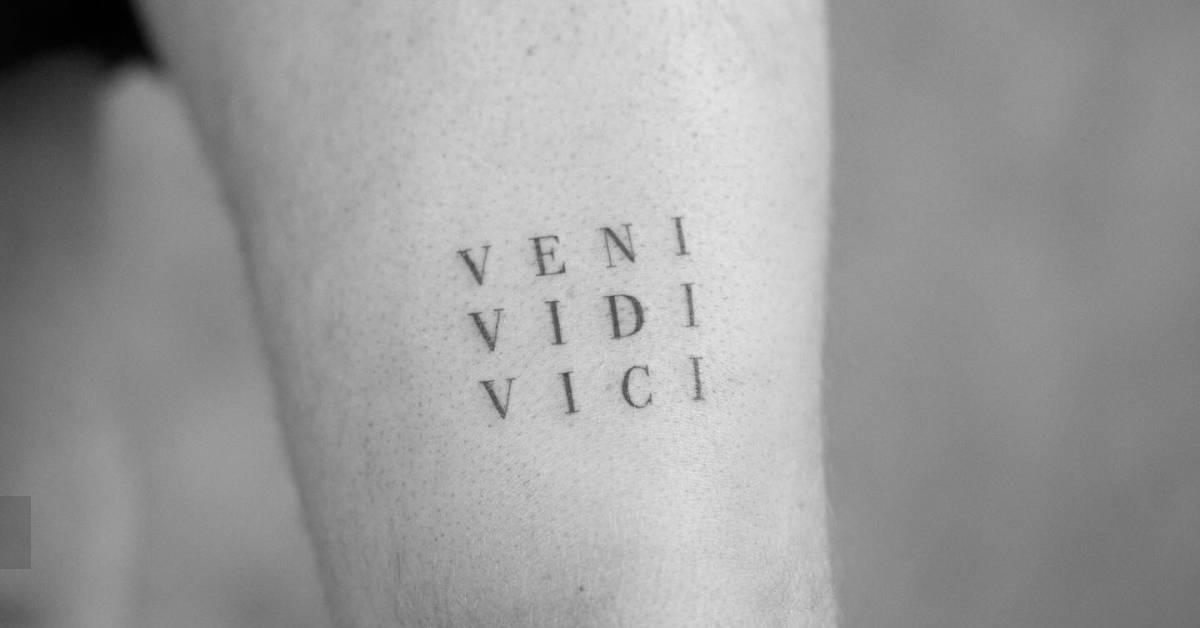
Julius caesar said 'veni, vidi, vici' to brag about his quick victory at the battle of zela. I came, i saw, i conquered Julius caesar immortalized his triumph in asia with the catchphrase “veni, vidi, vici” which encapsulated the swift victory, as well as caesar’s rise to absolute power. Many of its phrases have become timeless. We have utilized ecclesiastical latin primarily for the anthemic chorus, while introducing classical pronunciation in the narrative sections (e.g., veni, vidi, vici).

Veni Vidi Vici Tattoo
Latin, the language of the ancient romans, has left an indelible mark on modern languages, law, philosophy, science, and literature. Learn who coined this famous latin phrase and how it came to be so well known. Julius caesar said 'veni, vidi, vici' to brag about his quick victory at the battle of zela. Curious about the history and meaning of veni, vidi, vici?

Veni Vidi Vici Tattoo
A london college of fashion graduate, she credits the genes from her italian grandmother for her artistic flair and eye for detail. Julius caesar’s proclamation veni, vidi, vici, better known in english as “i came, i saw, i conquered,” is without a doubt one of the most famous quotations from antiquity. The phrase means 'i came, i saw, i conquered' and is admired for its brevity and impact.
The Phrase Means 'I Came
A london college of fashion graduate, she credits the genes from her italian grandmother for her artistic flair and eye for detail. Many of its phrases have become timeless. Julius caesar’s proclamation veni, vidi, vici, better known in english as “i came, i saw, i conquered,” is without a doubt one of the most famous quotations from antiquity. Veni, vidi, and vici are first person singular perfect indicative active forms of the latin verbs venire, videre, and vincere, which mean to come, to see, and to conquer, respectively.
Learn Who Coined This Famous Latin Phrase And How
Veni has fashion running through her veins! I came, i saw, i conquered Julius caesar immortalized his triumph in asia with the catchphrase “veni, vidi, vici” which encapsulated the swift victory, as well as caesar’s rise to absolute power. Curious about the history and meaning of veni, vidi, vici?
Perhaps The Most Famous Phrase Attributed To The Powerful
We have utilized ecclesiastical latin primarily for the anthemic chorus, while introducing classical pronunciation in the narrative sections (e.g., veni, vidi, vici). Julius caesar said 'veni, vidi, vici' to brag about his quick victory at the battle of zela. Latin, the language of the ancient romans, has left an indelible mark on modern languages, law, philosophy, science, and literature.