 Loan Agreement Templates
Indemnity Waiver Template - The meaning of indemnity is security against hurt, loss, or damage. How to use indemnity in a sentence. In contract law, an indemnity is a contractual obligation of one party (the indemnitor) to compensate the loss incurred by another party (the indemnitee) due to the relevant acts of the indemnitor or any other. Indemnity is a contractual agreement, commonly found in insurance policies, in which one party agrees to compensate the other for potential losses or damages in exchange for premium. Learn what an indemnity agreement is, why it matters, and how it protects you from risk. Indemnity is protection or security against damage or loss, or compensation for damages or money spent.

Fillable Online Indemnity, Waiver And Declaration Form Studylib Fax
In contract law, an indemnity is a contractual obligation of one party (the indemnitor) to compensate the loss incurred by another party (the indemnitee) due to the relevant acts of the indemnitor or any other. Indemnity is a type of insurance that covers a wide range of damages and losses. Insurance coverage provides indemnity to a person (or organization) by insuring them for.

Free Waiver Templates To Edit Online And Print
Indemnity is a type of insurance that covers a wide range of damages and losses. Indemnity is protection or security against damage or loss, or compensation for damages or money spent. In contract law, an indemnity is a contractual obligation of one party (the indemnitor) to compensate the loss incurred by another party (the indemnitee) due to the relevant acts of the indemnitor or any other.

Free Waiver Form Template To Edit Online
The concept of indemnity is based on a contractual agreement made between two parties in which one party (the indemnitor) agrees to pay for potential losses or damages caused by the other party (the. In contract law, an indemnity is a contractual obligation of one party (the indemnitor) to compensate the loss incurred by another party (the indemnitee) due to the relevant acts of the indemnitor or any other.
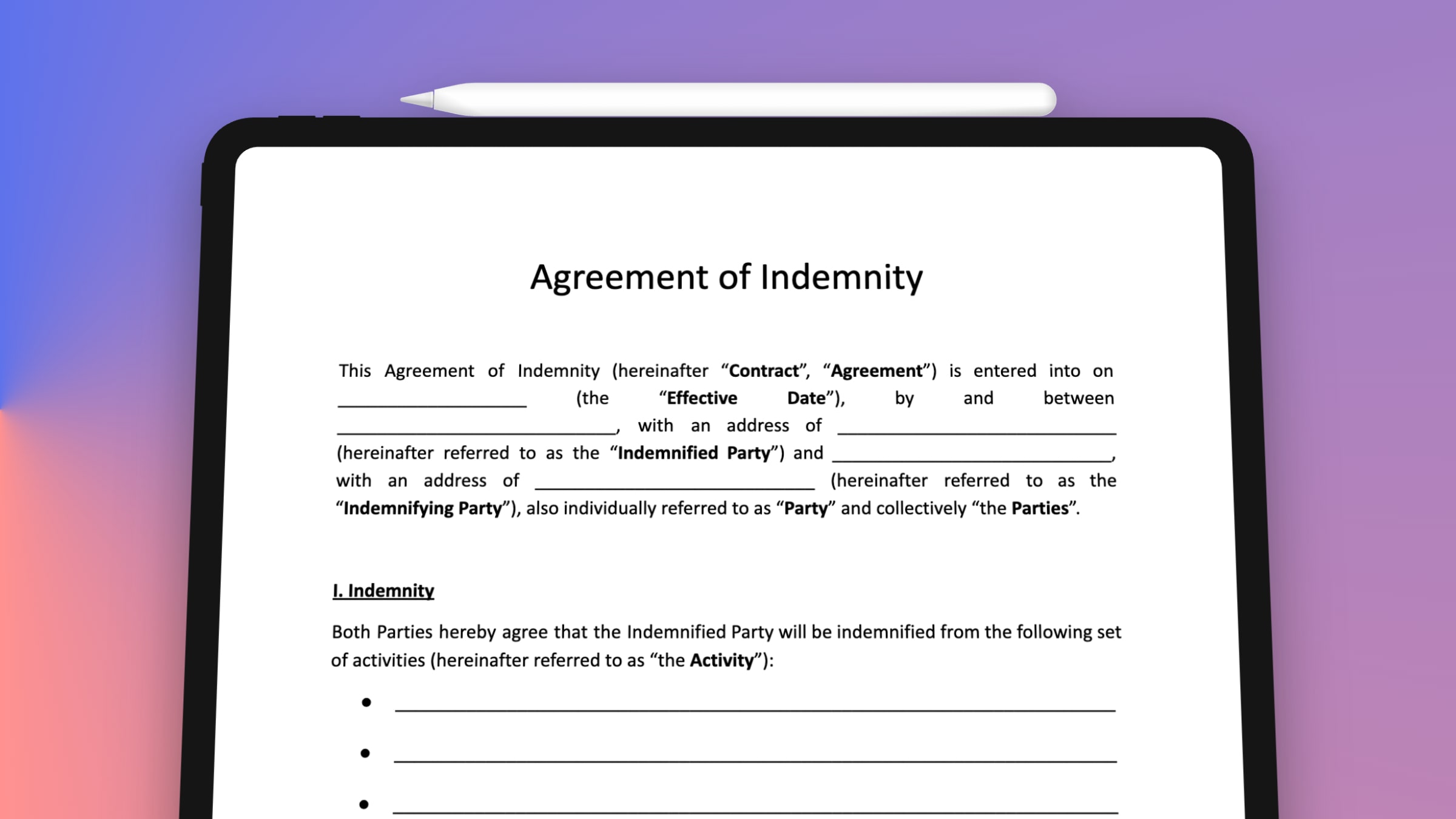
Indemnity Form Template
How to use indemnity in a sentence. The concept of indemnity is based on a contractual agreement made between two parties in which one party (the indemnitor) agrees to pay for potential losses or damages caused by the other party (the. Recompense for loss, damage, or injuries. The meaning of indemnity is security against hurt, loss, or damage. Insurance coverage provides indemnity to a person (or organization) by insuring them for.

Free Waiver Form Template To Edit Online
In the indemnity clause, one party commits to compensate another party for any prospective loss or damage. Recompense for loss, damage, or injuries. The meaning of indemnity is security against hurt, loss, or damage. Learn what an indemnity agreement is, why it matters, and how it protects you from risk. In contract law, an indemnity is a contractual obligation of one party (the indemnitor) to compensate the loss incurred by another party (the indemnitee) due to the relevant acts of the indemnitor or any other.
Indemnity Is A Contractual Agreement
Learn what an indemnity agreement is, why it matters, and how it protects you from risk. In the indemnity clause, one party commits to compensate another party for any prospective loss or damage. Insurance coverage provides indemnity to a person (or organization) by insuring them for. In contract law, an indemnity is a contractual obligation of one party (the indemnitor) to compensate the loss incurred by another party (the indemnitee) due to the relevant acts of the indemnitor or any other.
The Meaning Of Indemnity Is Security Against Hurt
Indemnity is protection or security against damage or loss, or compensation for damages or money spent. Indemnity is a type of insurance that covers a wide range of damages and losses. Protection against possible damage or loss, especially a promise of payment, or the money paid…. How to use indemnity in a sentence.
The Concept Of Indemnity Is Based On A Contractual
An indemnity contract arises when one individual takes on the obligation to pay for any loss or damage that has been or might be. Recompense for loss, damage, or injuries.