 Biology Genetics Worksheets
Percent Of Change Word Problems Worksheet - This gives you the percentage value as a number. 100 percent (100%) of a number is the same number: In mathematics, a percentage, percent, or per cent (from latin per centum 'by a hundred') is a number or ratio expressed as a fraction of 100. How to use percent in a sentence. One percent (1%) means 1 per 100. 1 percent represents 1/100 fraction.
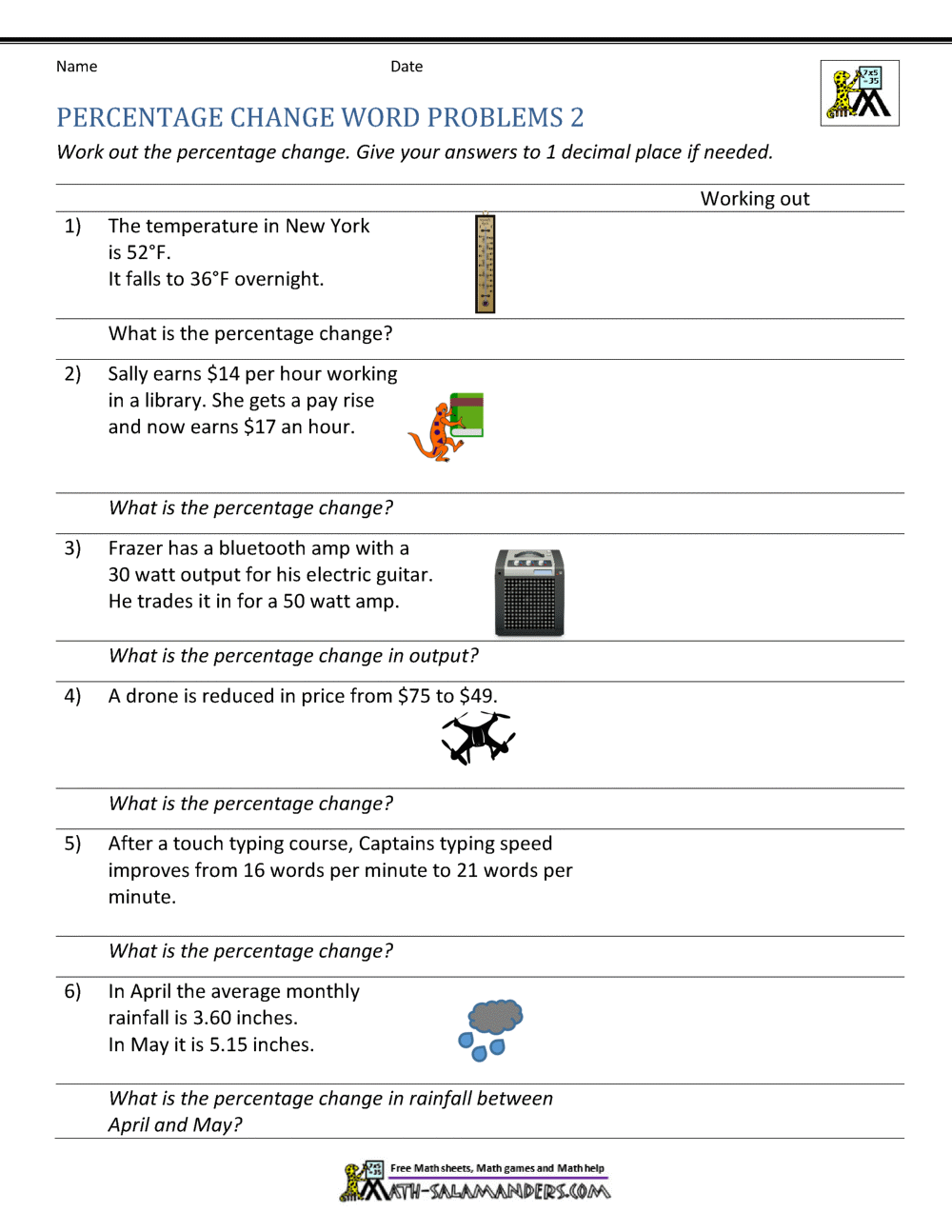
Percentage Increase And Decrease Worksheets Worksheets Library
How do you find a percent of a number? It is often denoted using the percent sign (%), [1] although the. 1 percent represents 1/100 fraction. Access alternative investments on the platform powering the future of private markets. Percentage is a value that represents the proportion of one number to another number.

Percent Of Change Worksheets Percentage Change Worksheet (With
1 percent represents 1/100 fraction. 100 percent (100%) of a number is the same number: Unlock private credit investments with percent. The percent sign % (sometimes per cent sign in british english) is the symbol used to indicate a percentage, a number or ratio as a fraction of 100. This gives you the percentage value as a number.

Percent Of Change Worksheets
How do you find a percent of a number? This gives you the percentage value as a number. In mathematics, a percentage is a number or ratio that represents a fraction of 100. Percentage is a value that represents the proportion of one number to another number. 1 percent represents 1/100 fraction.

Percent Of Change Worksheets
To calculate a percentage, you typically divide the part (the smaller value) by the whole (the larger value), and then multiply the result by 100. It is often denoted using the percent sign (%), [1] although the. In mathematics, a percentage, percent, or per cent (from latin per centum 'by a hundred') is a number or ratio expressed as a fraction of 100.

Percentage Increase Or Decrease Of Whole Numbers With 1
This gives you the percentage value as a number. The percent sign % (sometimes per cent sign in british english) is the symbol used to indicate a percentage, a number or ratio as a fraction of 100. In mathematics, a percentage, percent, or per cent (from latin per centum 'by a hundred') is a number or ratio expressed as a fraction of 100.
This Gives You The Percentage Value As A Number
1% of this line is shaded green: To find a percent of a number, you can write the percent as a fraction and then multiply the fraction by the total amount. It is often denoted using the percent sign (%), [1] although the. When we say percent we are really saying per 100.
1 Percent Represents 1/100 Fraction
How do you find a percent of a number? See how to use percent formulas to calculate percentages and find. In mathematics, a percentage, percent, or per cent (from latin per centum 'by a hundred') is a number or ratio expressed as a fraction of 100. Unlock private credit investments with percent.
Related Signs Include The Permille (Per Thousand)
One percent (1%) means 1 per 100. Use this calculator to find percentage of a whole or work out the percentage given numbers and percent values. The meaning of percent is one part in a hundred. Access alternative investments on the platform powering the future of private markets.
In Mathematics, A Percentage Is A Number Or Ratio
To calculate a percentage, you typically divide the part (the smaller value) by the whole (the larger value), and then multiply the result by 100. Percentage is a value that represents the proportion of one number to another number. The percent sign % (sometimes per cent sign in british english) is the symbol used to indicate a percentage, a number or ratio as a fraction of 100. 100 percent (100%) of a number is the same number: