 Photo Release Forms
Component Form Of A Vector - The numbers given as a and b represent the horizontal component and the. Components of a vector refer to the parts of a vector that show how it influences each axis in a coordinate system. The first ordered pair uses angle brackets to describe a vector, whereas the second uses. Component form is a way of writing a vector using its horizontal and vertical values, placed inside angle brackets. Components, magnitude & direction, and unit vectors. A vector is a specific quantity drawn as a line segment with an arrowhead at one end.

Vector Components And Graphic Representations Easily Explained Youtube
Components, magnitude & direction, and unit vectors. What is the component form of a vector? A vector is a specific quantity drawn as a line segment with an arrowhead at one end. Review all the different ways in which we can represent vectors: A vector from the origin that moves 3 units right and 4 units up is.

Ppt Vectors In Real World Scenarios Powerpoint Presentation, Free
First, however, let’s examine the basics of vectors. The component form of a vector is the ordered pair of a vector that describes the movement or the change in the $x$ and $y$ values. Let us learn more about the components of a vector, how to find the components of a vector, and the various arithmetic operations involving components of a vector.

Component Form Physics 1.8.4 Coordinate Systems And Components
However, when writing the component form of a vector, it is important to distinguish between $ x,y $ and $(x,y)$. It shows how far a vector moves along each axis. Components, magnitude & direction, and unit vectors. A vector is a specific quantity drawn as a line segment with an arrowhead at one end. The first ordered pair uses angle brackets to describe a vector, whereas the second uses.

Component Form Of A Vector
This makes vector addition, subtraction, graphing, and analysis much easier. Let us learn more about the components of a vector, how to find the components of a vector, and the various arithmetic operations involving components of a vector. First, however, let’s examine the basics of vectors. Component form is a way of writing a vector using its horizontal and vertical values, placed inside angle brackets.
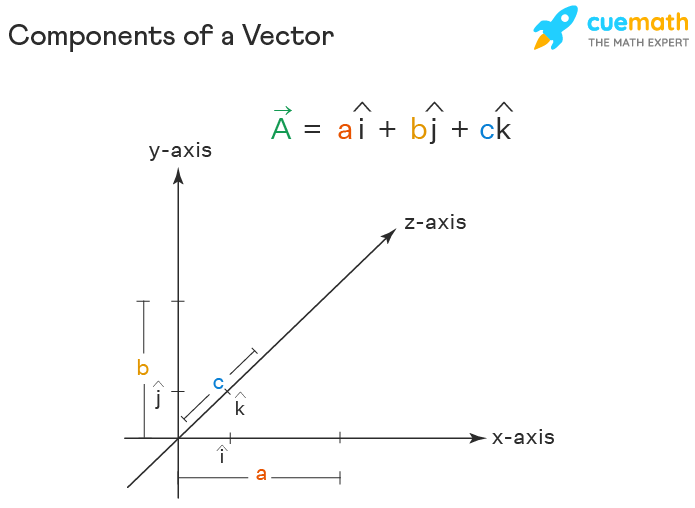
Components Of A Vector Formula, Applications, Examples
Let us learn more about the components of a vector, how to find the components of a vector, and the various arithmetic operations involving components of a vector. This makes vector addition, subtraction, graphing, and analysis much easier. The numbers given as a and b represent the horizontal component and the. However, when writing the component form of a vector, it is important to distinguish between $ x,y $ and $(x,y)$.
This Makes Vector Addition
Components of a vector refer to the parts of a vector that show how it influences each axis in a coordinate system. Component form is one of the most useful ways to write a vector. Component form is a way of writing a vector using its horizontal and vertical values, placed inside angle brackets. A vector in standard position can be represented by the.
It Has An Initial Point
It shows how far a vector moves along each axis. Vector v in figure 1 has an initial point at the origin (0,0) and is said to be in standard position. Let us learn more about the components of a vector, how to find the components of a vector, and the various arithmetic operations involving components of a vector. Components, magnitude & direction, and unit vectors.
In Two Dimensions
The first ordered pair uses angle brackets to describe a vector, whereas the second uses. Vectors are often represented in component form. However, when writing the component form of a vector, it is important to distinguish between $ x,y $ and $(x,y)$. The component form of a vector is the ordered pair of a vector that describes the movement or the change in the $x$ and $y$ values.
Review All The Different Ways
A vector from the origin that moves 3 units right and 4 units up is. Therefore, we can say that algebraically, a vector is an ordered pair, while geometrically, a vector is just a directed line segment. First, however, let’s examine the basics of vectors. What is the component form of a vector?